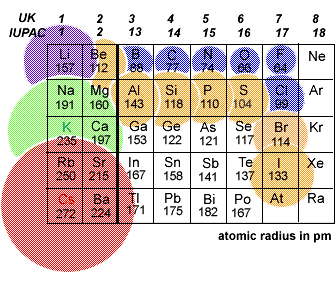
The diagram below shows that the size of atoms vary depending on the position in the periodic table
The size of an atom is determined by the size of its electron cloud.The size of the electron cloud depends on
The graphic shows the sizes of the elements in s- and p-block of the periodic table in picometres.
These are FAR more important than numbers!!
When comparing the size of the electron cloud for atoms of elements
in the same group, the atom with the higher atomic number is larger.
in the same period (row), the lower atomic number is larger.
The metal atoms are the largest in a row.
The increase in size for a particular group is most significant going from period 2 to period 3.
You can compare sizes on the basis of trends ONLY for atoms in the same group or atoms in the same period.
If a question has atoms from more than one group or period, before making comparisons
The size of an atom is determined by the size of its electron cloud.The size of the electron cloud depends on
the number of the highest electronic shell occupied
the number of protons
the electron distribution
the number of protons
the electron distribution
The graphic shows the sizes of the elements in s- and p-block of the periodic table in picometres.
There are a variety of difficulties associated with measuring the sizes of atoms. It is possible to measure the distance between atoms in the elemental form of metals, but the radii of non-metals are often measured when they are combined with another atom in a covalent bond. Therefore the sizes reported may be different in tables from other sources.
What are the trends?These are FAR more important than numbers!!
When comparing the size of the electron cloud for atoms of elements
in the same group, the atom with the higher atomic number is larger.
in the same period (row), the lower atomic number is larger.
The metal atoms are the largest in a row.
The increase in size for a particular group is most significant going from period 2 to period 3.
This has lots of consequences for the chemistry of these atoms.
Strategy for answering questions on relative sizes of atoms:You can compare sizes on the basis of trends ONLY for atoms in the same group or atoms in the same period.
If a question has atoms from more than one group or period, before making comparisons
cluster the atoms so that those from the same group are together and those from the same row are together.