One characteristic of transition metals is that their compounds are coloured.
The colour of the solids in the images below is in each case due to the presence of the transition metal ion given in brackets after the compound name.
Two of these solids contain ions that are reactants in a titration of Fe2+ with MnO4–.
The other two solids contain ions that are the transition metal-containing products of the reaction.
In each case the intensity of the colour in the solid is much greater than its aqueous solution at concentrations of 0.2 or below used in a titration.
However, despite this, the images show that
The colour of the solids in the images below is in each case due to the presence of the transition metal ion given in brackets after the compound name.
sulfate7H2O.jpg) iron(II) sulfate (Fe2+) very pale green solution | 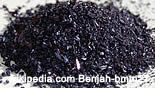 potassium (MnO4–) purple solution |
nitrate9H2O.jpg) iron(III) nitrate (Fe3+) very pale purple solution | sulfate4H2O.jpg) manganese(II) sulfate (Mn2+) very pale pink solution |
Two of these solids contain ions that are reactants in a titration of Fe2+ with MnO4–.
The other two solids contain ions that are the transition metal-containing products of the reaction.
In each case the intensity of the colour in the solid is much greater than its aqueous solution at concentrations of 0.2 or below used in a titration.
However, despite this, the images show that
- there is a dramatic change in colour from reactants to products.
- the colour of the solution in the titration flask will depend on how much titrant has been added
At the equivalence point chemically equivalent amounts of reactants and products are present.
The end point is the point in the titration at which a colour change occurs.
Ideally the end point and the equivalence point occur at the same or very close to the same added volume of titrant.,The end point is the point in the titration at which a colour change occurs.